New Garage Door Installation: What Homeowners Should Expect on Installation Day
A new garage door installation is a significant upgrade for any home. Whether replacing an older door or installing a new system as part of an improvement project, homeowners often want to know what actually happens on installation day. Understanding the process ahead of time helps set expectations, reduce stress, and ensure everything goes smoothly.
This guide explains what homeowners can expect before, during, and after a residential garage door installation, from preparation through final testing. It is written for homeowners across multi-city service areas such as Sacramento, Folsom, Elk Grove, Roseville, Livermore, Dublin, and surrounding communities.
Why Professional Garage Door Installation Matters
A garage door is one of the heaviest moving components in a home. It relies on precisely balanced springs, aligned tracks, secure hardware, and correctly calibrated openers. Professional garage door installation ensures:
- Safe handling of high-tension components
- Proper alignment and balance
- Reliable daily operation
- Correct setup of safety features
- Manufacturer warranty protection
While installation may look straightforward, small errors can lead to premature wear, safety risks, or the need for early garage door repair.
Before Installation Day: How Homeowners Can Prepare
Preparing ahead of time helps the installation process move efficiently.
Clear the Garage Area
Installers need open access to the garage opening, ceiling space, and side walls. Homeowners should:
- Move vehicles outside
- Clear stored items near the door and tracks
- Remove fragile or valuable items from nearby shelves
Ensure Power Access
Garage door openers require electrical power. Confirm that outlets are accessible and functional before installation begins.
Secure Pets and Children
Installation involves heavy materials, tools, and moving parts. Keeping pets and children away from the work area improves safety.
Arrival and Initial Inspection
On installation day, technicians typically begin with an inspection of the existing garage opening and structure.
What the installer checks
- Door opening measurements
- Structural framing condition
- Ceiling clearance and headroom
- Track mounting points
- Opener compatibility
This step ensures the new garage door system fits properly and meets safety standards before work begins.
Removal of the Old Garage Door
For replacement projects, the existing garage door and hardware are carefully removed.
This includes:
- Detaching the door panels
- Removing old tracks, springs, and cables
- Disconnecting the opener from the door
Professional installers follow safety protocols when removing tensioned springs and cables. This step is one reason homeowners should avoid DIY removal.
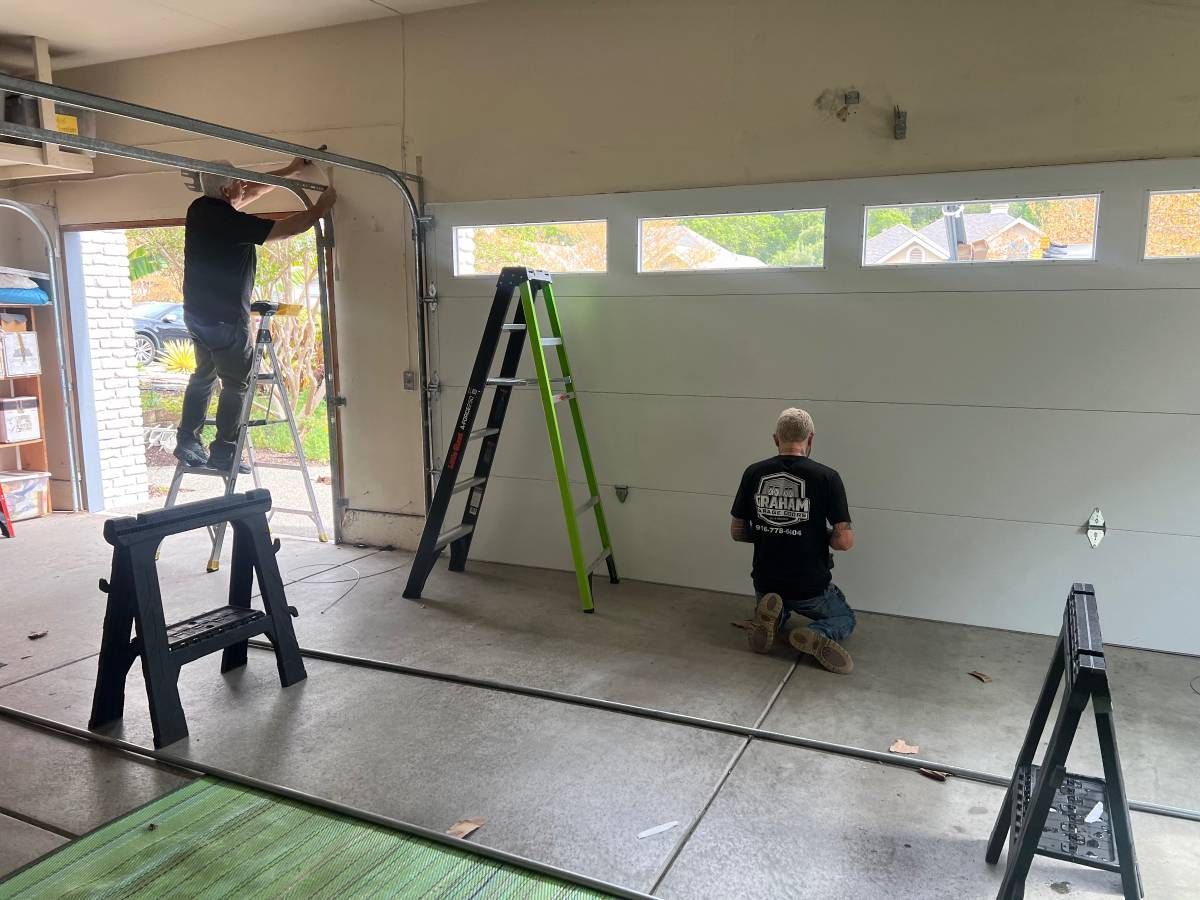
Installing the New Garage Door System
Once the old door is removed, installation of the new residential garage door begins.
Step 1: Track and Hardware Installation
New vertical and horizontal tracks are securely mounted and aligned. Proper alignment is critical to smooth operation and long-term reliability.
Step 2: Door Panel Installation
Panels are installed one section at a time, starting from the bottom. Each panel is leveled and reinforced as needed to ensure consistent movement.
Step 3: Spring and Cable Setup
Springs and lifting cables are installed and tensioned according to the door’s weight and specifications. This balance allows the door to open smoothly without excessive strain on the opener.
This step requires professional expertise due to the high tension involved.
Garage Door Opener Installation or Reconnection
If a new opener is included, or an existing opener is reused, this step follows door installation.
Opener setup includes:
- Mounting the opener motor
- Connecting the opener arm to the door
- Wiring safety sensors
- Programming remotes and wall controls
The opener is then synchronized with the door to ensure smooth, consistent operation.
Safety Feature Testing
Modern garage doors include built-in safety features designed to protect people, pets, and property.
Technicians test:
- Auto-reverse functionality
- Safety sensor alignment and response
- Manual release operation
- Force and travel limits
If the door encounters resistance or a sensor interruption, it must respond immediately. This testing is essential to prevent injuries and damage.
Final Adjustments and Calibration
Once the system is fully installed, the technician fine-tunes the door.
This includes:
- Adjusting spring tension
- Ensuring smooth roller movement
- Confirming track alignment
- Verifying quiet operation
A properly installed garage door should open and close smoothly, evenly, and without excessive noise.
Homeowner Walkthrough and Instructions
Before leaving, the installer typically walks the homeowner through the completed system.
Homeowners learn:
- How to operate the door and opener
- How to use the manual release
- Basic maintenance tips
- What sounds or movements are normal
- When to schedule professional maintenance
This walkthrough helps homeowners feel confident using their new garage door.
How Long Does Installation Take?
Most residential garage door installations are completed within a few hours to a full day, depending on:
- Door size and material
- Whether an opener is installed
- Structural adjustments needed
- Removal of the old system
More complex or custom installations may require additional time.
After Installation: What Homeowners Should Expect
Following installation, homeowners may notice:
- Quieter operation
- Smoother movement
- Improved insulation
- Enhanced curb appeal
- Increased sense of security
New garage doors often improve both functionality and the overall appearance of a home.
Preventing Future Garage Door Repair Needs
To protect your investment and reduce the likelihood of future garage door repair, homeowners should:
- Schedule routine maintenance
- Keep tracks clean
- Monitor door movement and sounds
- Address minor issues early
- Avoid forcing the door open or closed
Preventative care helps extend the lifespan of residential garage doors and ensures reliable performance.
Why Experience Matters in Garage Door Installation
Professional installation reduces the risk of improper setup, premature component failure, and safety issues. Experienced installers understand how to adjust systems based on door weight, material, and daily usage patterns common in residential homes across varied climates and service regions.
Correct installation also ensures that warranties remain valid and that the door performs as intended for years to come.
Contact Us Today
If you are planning a new garage door installation or replacing an existing door, contact us today. A professional installation ensures your garage door operates safely, efficiently, and reliably from day one.
You might also like